Our vision
We pursue the goal of achieving social, economic and environmental sustainability through the use of local materials, merging vernacular and contemporary techniques to encourage participation and social inclusion, and strengthening the cultural identity of the place.
Chiwarà strives to foster communities that engage in dialogue with their context, where technology and nature support each other, by reducing the social and environmental impact of buildings and construction sites.
We approach sustainability from both an environmental and a social perspective, designing efficient buildings that make the most of the site’s natural potential and offer quality spaces whatever the climate.
We work alongside communities, where resources are scarce, to understand the human and natural potential of the context that has yet to be expressed. In this spirit we seek to engage with residents: to understand which interventions can give voice and shape to their needs and aspirations, and to strengthen their capacity to transform their own living environment, both physically and socio-politically.
What the name commits us to
Among the Bambara people of Mali, the Chiwarà is a spirit, half man and half antelope, who passed on to humankind the art of working the land and allowed people to prosper without breaking the balance with their environment.
Passing it on
The Chiwarà did not build in people’s place: he taught them. Our construction sites are also places of learning.
The balance
A building that exhausts its resources, or that its occupants cannot maintain, is not a good building, even if it stands.
The method
We chose this name because it describes the way we work better than any acronym could.
What we are
The Chiwarà Project Srl Società Benefit is a consultancy registered on 20 December 2022 in Reggio Emilia, Italy. Società Benefit status, the Italian equivalent of a benefit corporation, requires us under our articles of association to pursue social and environmental impact on a par with profitability, and to report on it.
Our permanent structure has two people: Mattia Bertolini, legal representative and project coordinator, and Pietro Pedrazzi, technical director. Everything else goes through a network of partner firms based in the countries where we work. This size is a choice: it puts spending where it creates value, in the field, with teams that remain after we leave.
Società Benefit
Registered on 20 December 2022, Reggio Emilia
ISO 14001 certified
Certificate no. 50 100 17428
A lean team
2 partners in Italy, 5 firms in Africa
Two awards
StudENT for Africa 2020, Premio Impresa Sostenibile 2024
Our three fields of work
These three activities are not separate service lines. A construction site feeds a training course, a training course produces data, and a study changes the design of the next site.
Design
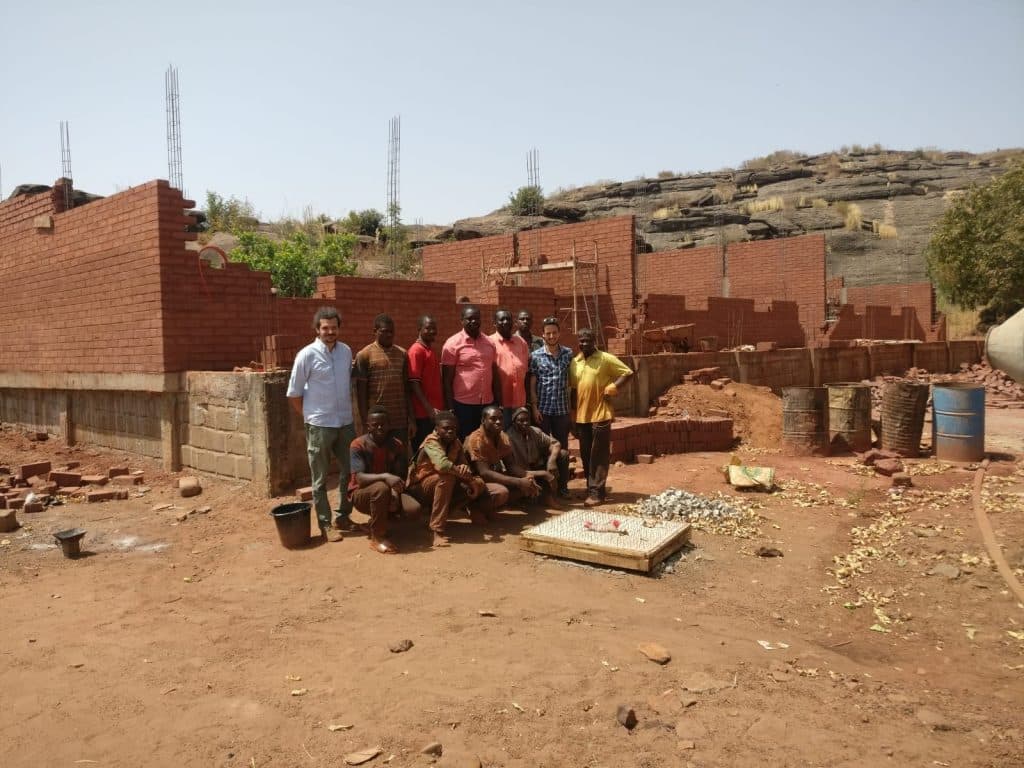
Architectural and bioclimatic design, technical studies, works supervision and owner’s representative support.
→
Training
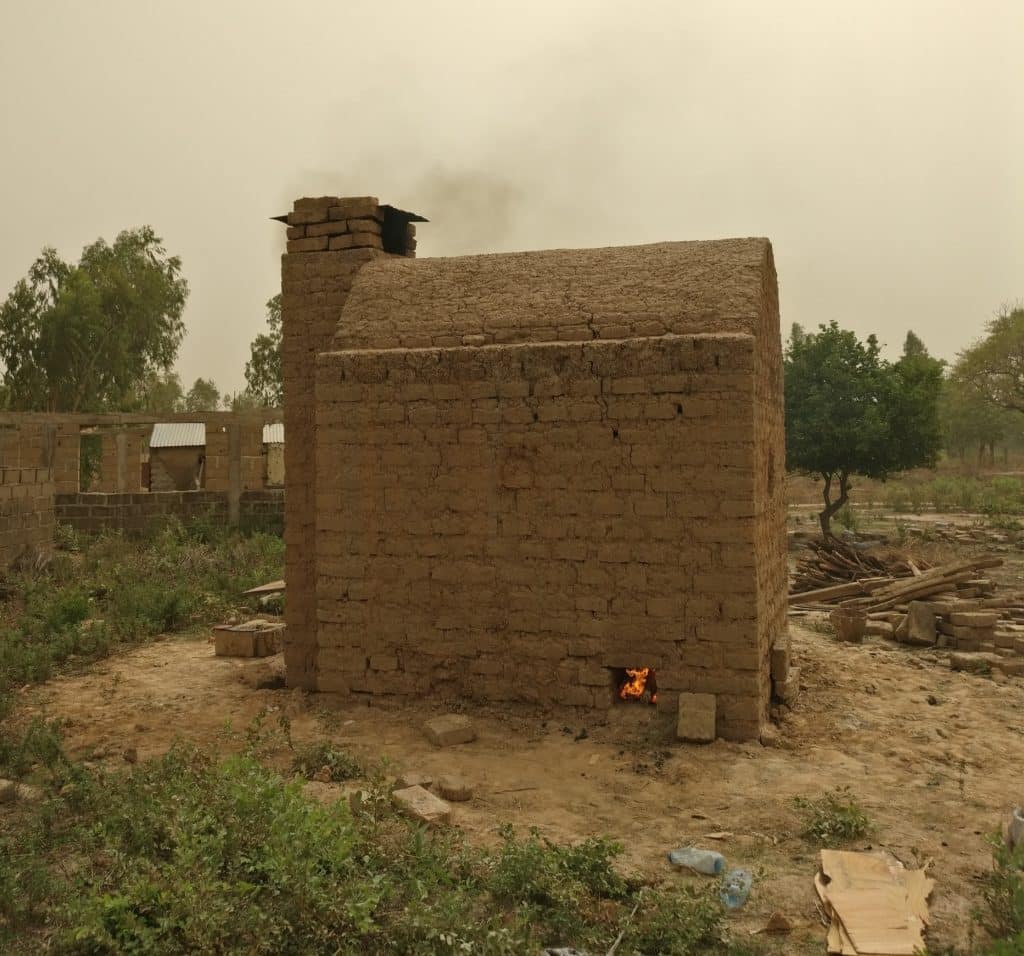
Building the skills of masons, technicians and companies, on site and in the classroom.
→
Research
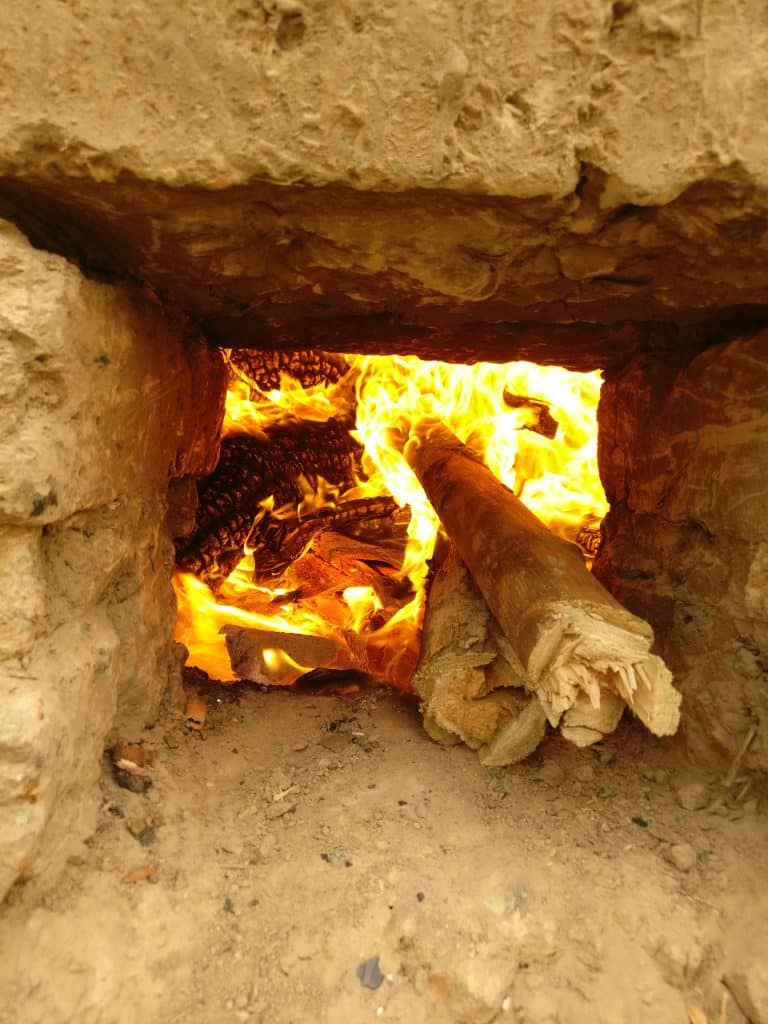
Life cycle assessments, carbon methodologies, supply-chain studies and scientific publications.
→What Società Benefit status changes in practice
The corporate purpose
Our articles of association set out common-benefit purposes alongside the company’s economic purpose. A decision that contradicted them would engage the directors’ liability.
The annual impact report
Every year we assess and publish our results against these purposes, using an external standard.
The trade-off
Preferring a slower local supply chain to imported materials, or devoting part of an assignment to training teams who will then work for others than us.
What we are not
Not an NGO
We invoice engineering services to clients who put them out to competitive tender, and our references are backed by signed performance certificates.
Not a construction company
We design, supervise, train and document. Execution is left to local companies: that is where the skills must remain.
Not an expatriate firm
Two permanent staff in Italy, and partners who live and work in the countries where we operate.
Where we work
Our assignments have been carried out in Mali, Senegal, Mozambique, Madagascar, Djibouti, Ethiopia and Chad. Our partners also cover Côte d’Ivoire and Burkina Faso.
This footprint is not a commercial ambition: it follows the availability of resources and the existence of a local supply chain that can be mobilised. We expand where one of our associated firms is already established, or where a programme asks us to help bring such a supply chain into being.
Our conviction
A sustainable building is only worthwhile if it is comfortable without consuming energy, built by local companies, and if its environmental benefit is measured with a method that others can verify.