Design
Bioclimatic design: buildings that the climate does not force to be air-conditioned
Our projects are developed with partners from the country, to share knowledge and ensure that our proposals suit the cultural and social context of the place.
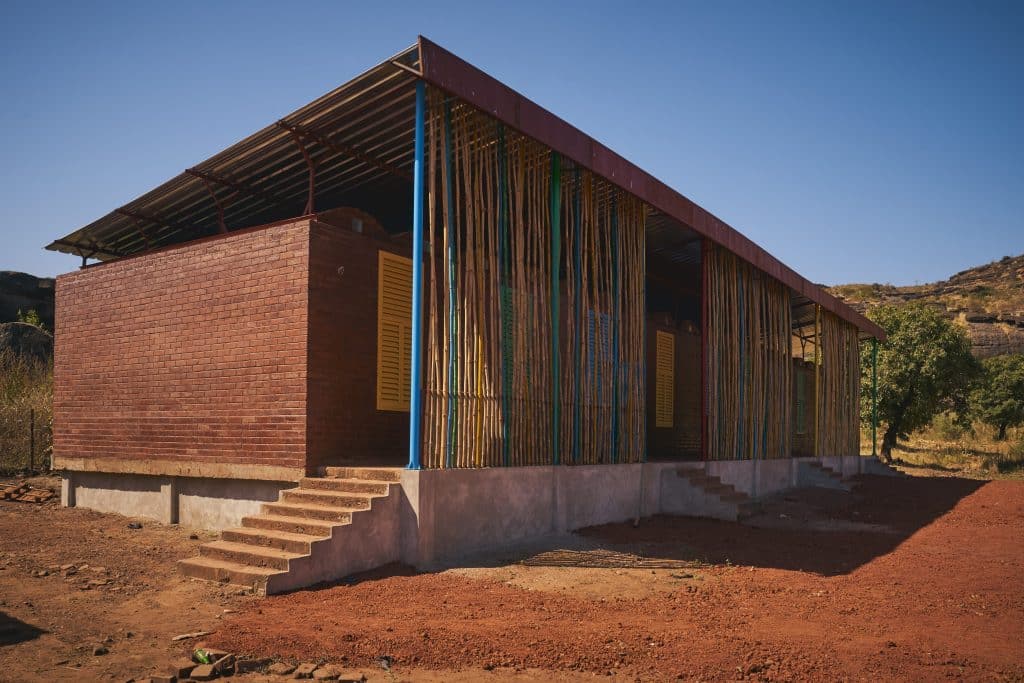
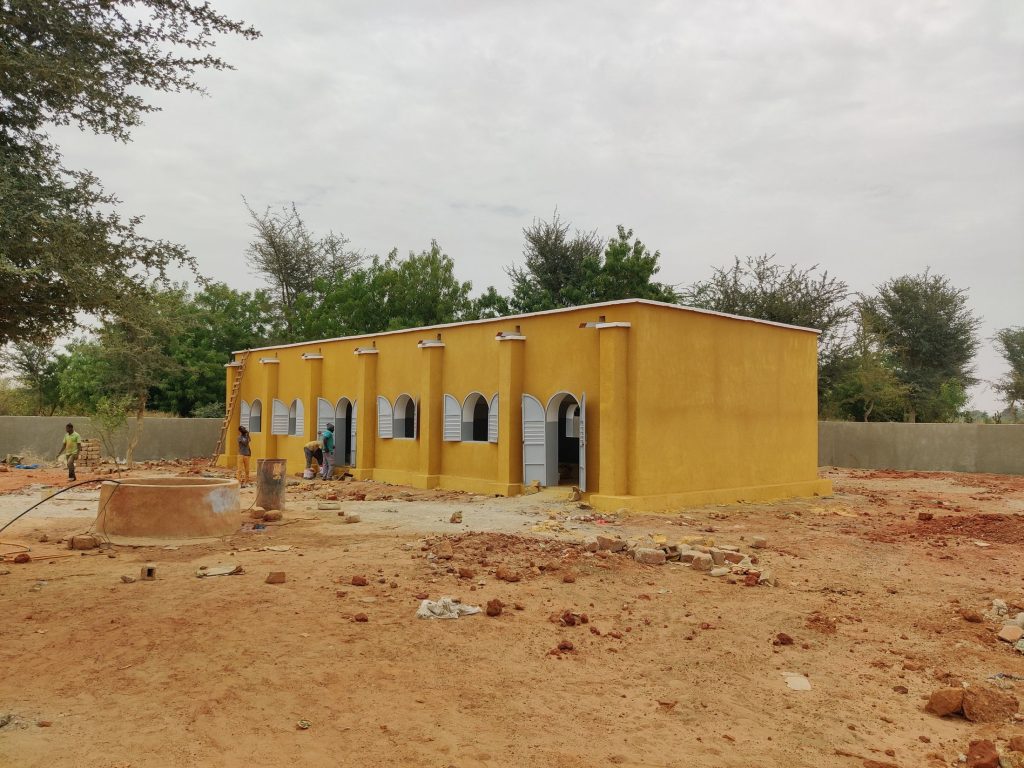
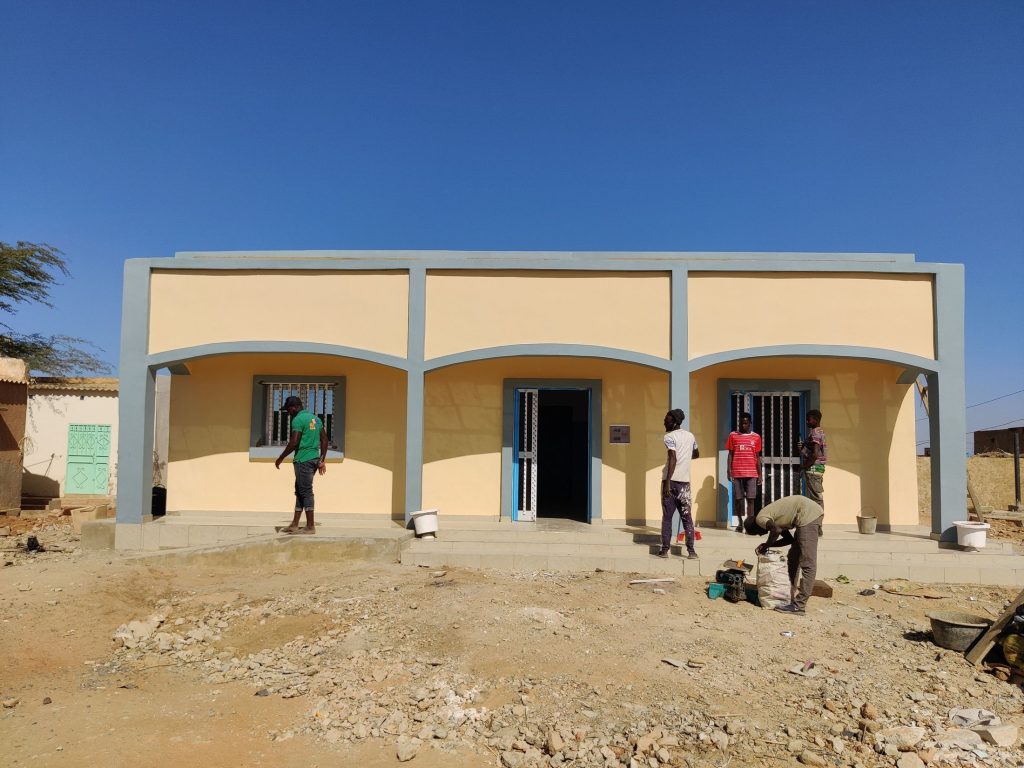
We design and supervise public and community facilities built with local materials: schools, maternity clinics, resilience centres, buildings for economic activity. Every project starts from the same point: what the soil, the workforce and the climate of the site make possible.
What we take on
Our work covers the full chain of studies and stops at the door of execution: the works are carried out by local companies, and that is where the skills must remain.
Studies and design
Site surveys and geotechnical data, architectural design and bioclimatic strategy, outline and detailed preliminary design, technical design package, choice of building system and materials.
Works supervision
Quality control of the works on site, with local supervisors, and coordination between the client, contractors and stakeholders.
Owner’s representative support
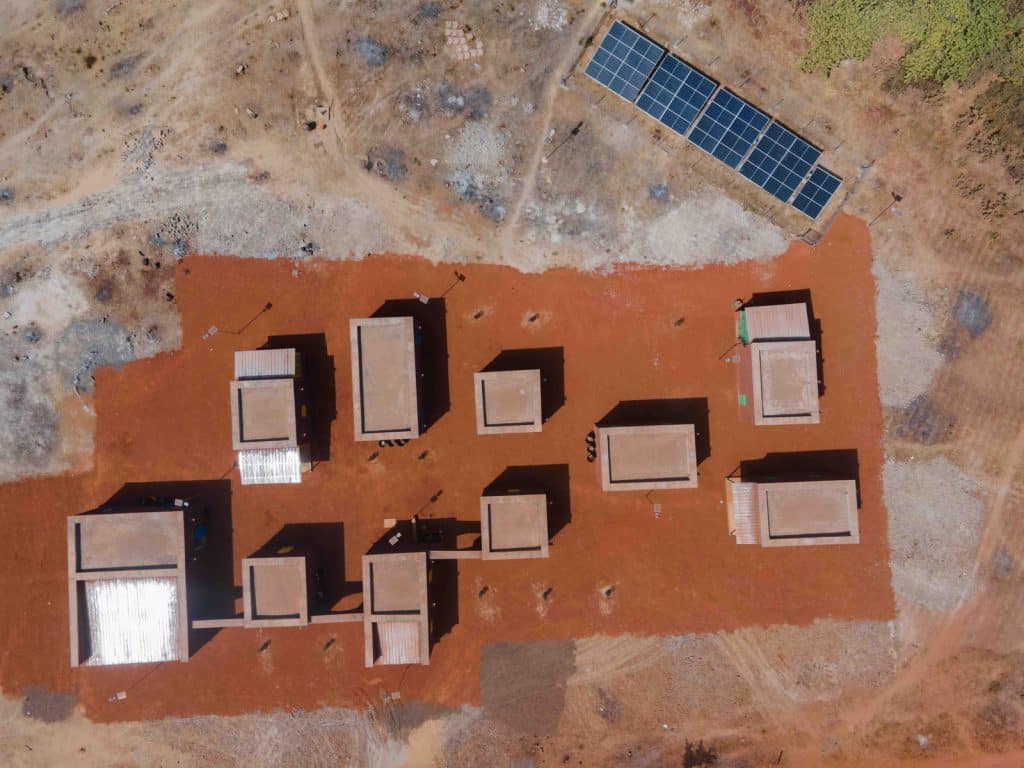
Technical support to the client, on its own or combined with design. On the electrified activity zones in Mali: technical assistance, design and supervision on five sites.
For the Ornion Community Resilience Centre in Mali, we delivered the three design phases, then handed the technical studies over to the BORDA team for implementation.
We manufacture
building components from local raw materials, to limit imports and turn the construction site into an economic lever.
We collaborate
with local partners to better understand the problems to be solved and to find solutions.
We develop
unique proposals, born of the constraints and opportunities we find on site.
We incorporate
the communities’ preferences into the project, to strengthen their sense of ownership.
We guide
construction from design to handover, with local supervisors on site.
Our projects
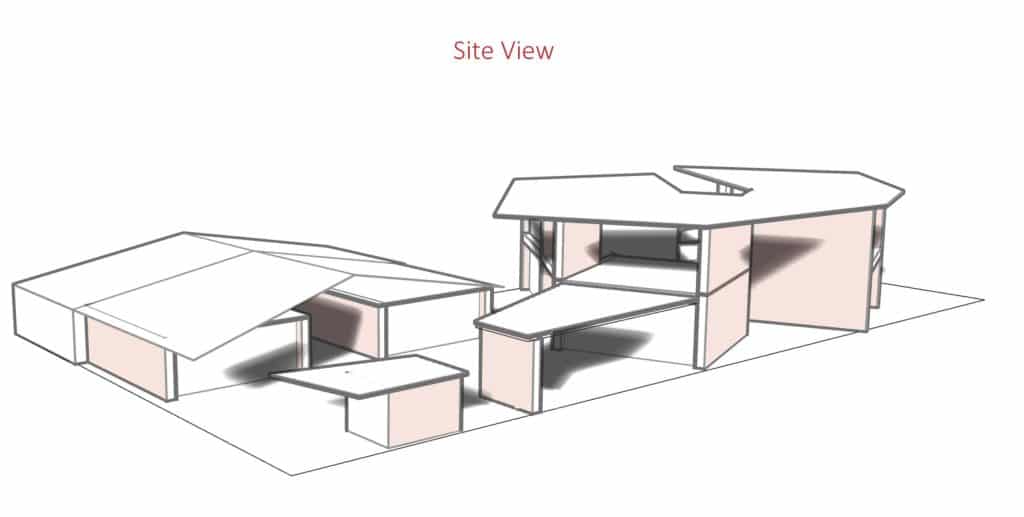
Our approach
Designing with a social purpose is as rewarding as it is demanding. Our approach is attentive: we study the vernacular traditions that give a place its identity, we identify the materials available on the local market with future cost and maintenance in mind, and we meet the community to identify skilled builders, both men and women.
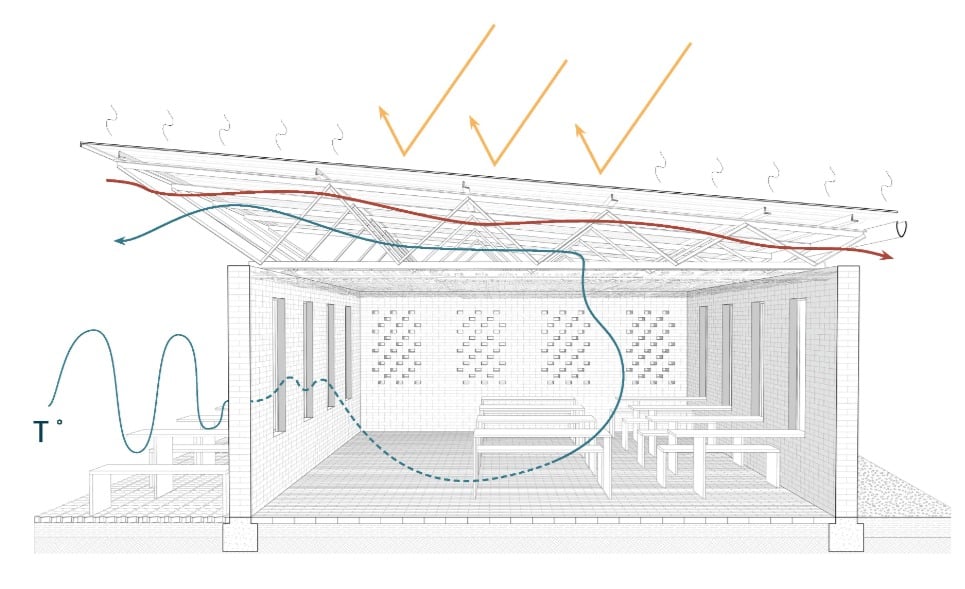
We apply the principles of bioclimatic design to provide the best indoor comfort and reduce the energy demand of buildings. Even before the first sketch, we seek to grasp the needs and aspirations of each community, so that the project becomes their own.
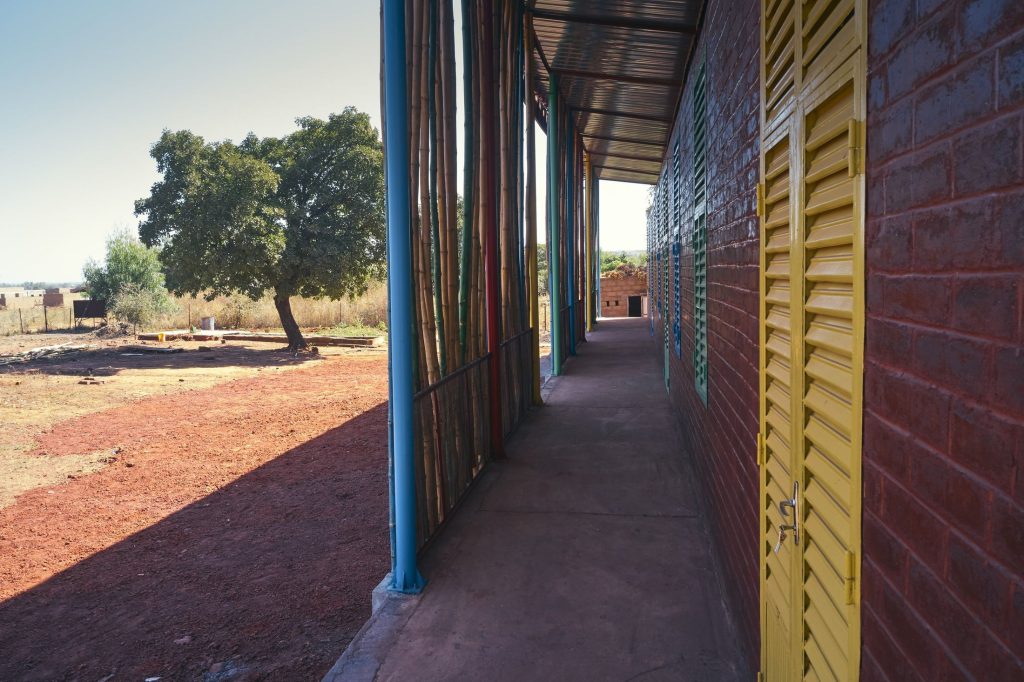
We aim for buildings that speak the architectural language of the place, comfortable and respectful of the environment. Each project is a new challenge, and our reward is what the residents and their cultures teach us.
The techniques we use
We do not champion one technique. Solutions are chosen according to the climate, the resources available on site, skills, maintenance capacity, supply chains and long-term cost, not according to a favourite technology.
Bioclimatic design
Orientation, shading, cross ventilation, thermal mass of the envelope, ventilated roof: the layer that makes all the others work. A good wall with the wrong orientation does not deliver comfort.
Compressed earth blocks
Produced on site from the site’s own soil, stabilised according to the geotechnical study, and used in ventilated double-layer walls. Kalan Deme So, Ornion.
Nubian Vault
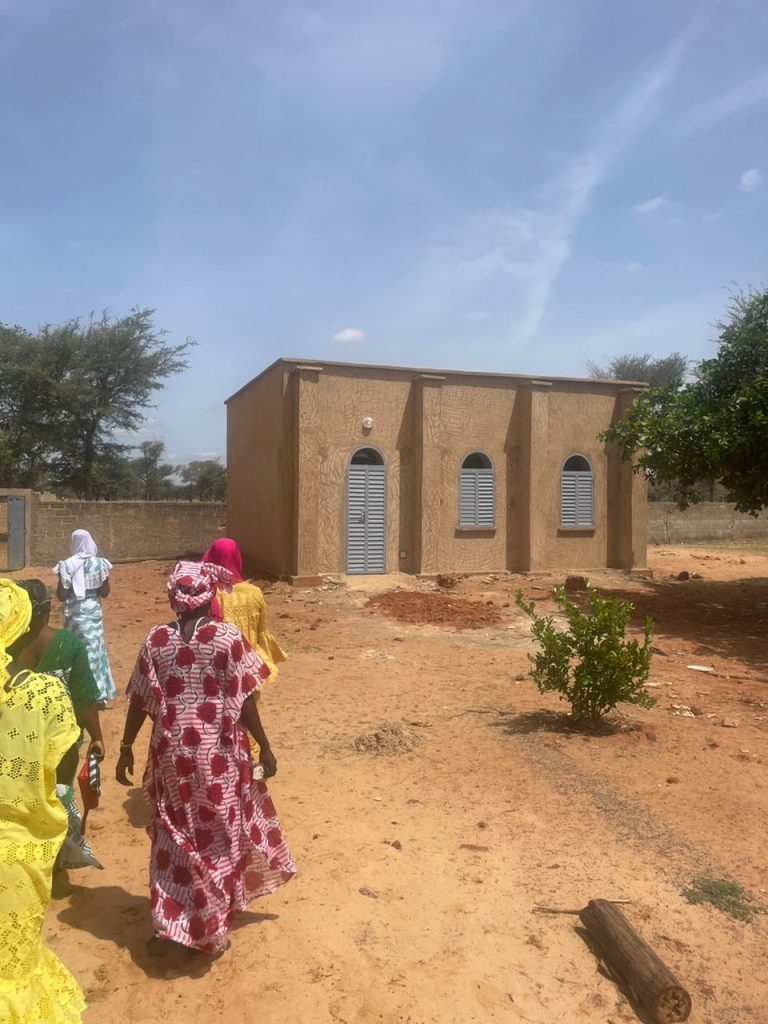
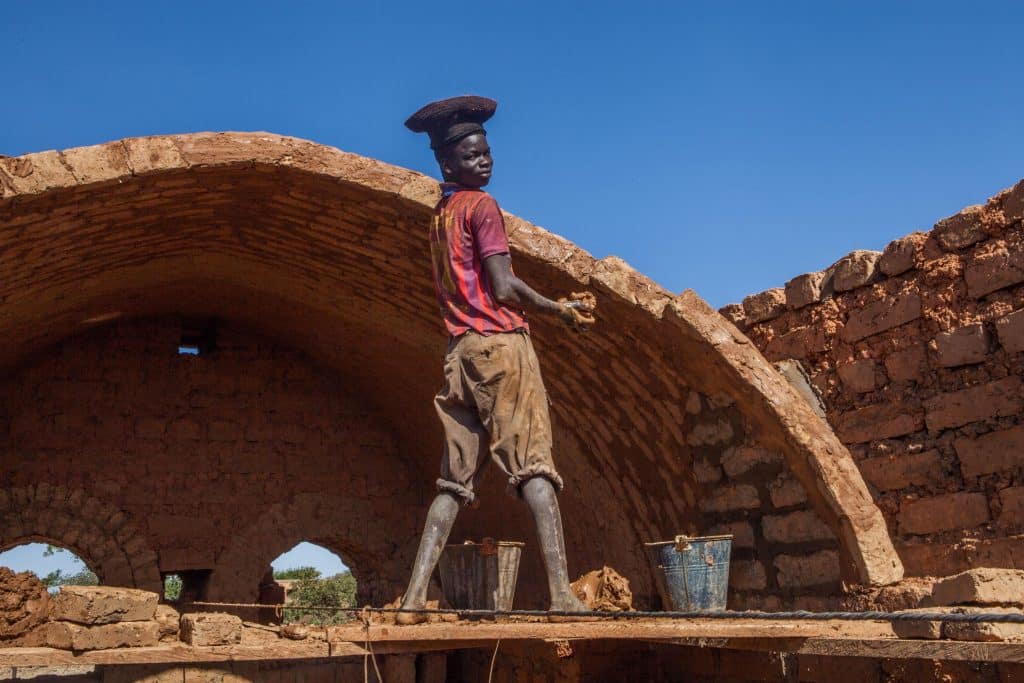
Roofing in mud bricks, without formwork or roof timber: no metal sheeting and no concrete roof. Godel, Keur Songho, Djilakh, electrified activity zones.
Adobe
Sun-dried moulded mud bricks: the most accessible technique, at the heart of our diagnostic and improvement work.
H-brick and typha-clay
Infill of clay soil and plant fibres, roof insulation made of typha, an invasive plant of the Senegal River. Kassack Nord maternity clinic.
Site supervision
Quality control of the works and coordination between the client, contractors and stakeholders, with local supervisors.
How we choose a building system
1
The soil. The geotechnical study tells us what the site’s earth allows. We start from this data, not from a preference.
2
The supply chain. A technique with nobody able to implement it within a day’s drive is unusable.
3
Maintenance. If it cannot be ensured, we plan training or change the solution, from the design stage onwards.
4
Whole-life cost. Not just construction: a vault does away with the timber frame and metal sheeting, and a ventilated roof reduces cooling needs.
When these criteria do not converge, we tell the client, with the costed consequences of each option, rather than deciding for them. We do not carry out the works, we sell neither materials nor equipment, and we are not tied to any manufacturer: we have nothing to sell at the end of our recommendation.
Frequently asked questions
Do you carry out the works?
No. We design, supervise and document; execution is left to local companies. We do not supply materials, we sell no equipment and we are not tied to any manufacturer of presses, stabilisers or proprietary building systems.
How can we work together?
We respond to consultations, tenders and direct contracts, on our own or in consortium with our associated firms. Depending on the assignment, we act as designer, as designer and supervisor, or as owner’s representative.
How much does a building made of local materials cost?
It depends on the soil, the available supply chain and the brief. We reason in terms of whole-life cost, construction and use: a Nubian Vault does away with the timber frame and metal sheeting, and a ventilated roof reduces the need for cooling. When several options remain possible, we present them to the client with their costed consequences.
Does a building made of local materials need more maintenance?
Some do: an earth plaster needs periodic touching up. We say so at the design stage. If nobody can carry out this maintenance, we plan the corresponding training or we change the solution.
Which countries do you work in?
In sub-Saharan Africa. Our projects are located in Mali, Senegal, Mozambique, Madagascar, Djibouti, Ethiopia and Chad; our associated firms are based in Mali, Senegal, Côte d’Ivoire, Ethiopia and Mozambique.
Working with us
Tell us the country, the building type and the stage of progress: we will quickly let you know whether we are the right people to talk to.
Let’s talk about your project